
동시성 문제
- 여러 쓰레드가 동시에 같은 인스턴스의 필드 값을 변경하면서 발생하는 문제
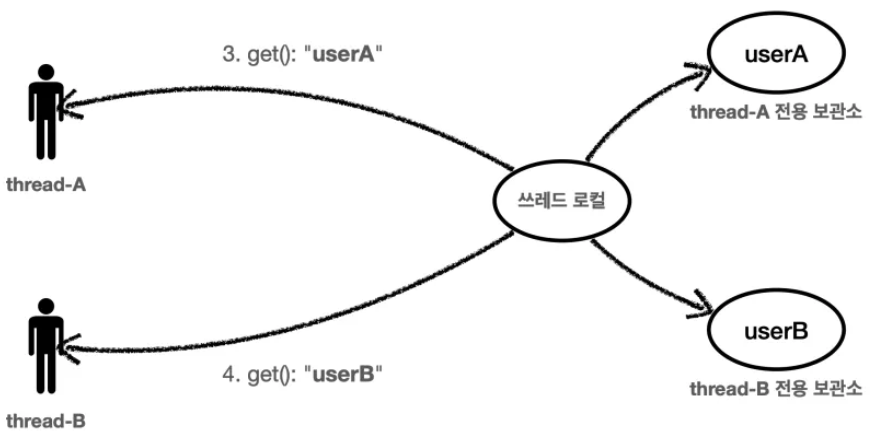
쓰레드 로컬
- 해당 쓰레드만 접근할 수 있는 특별한 저장소
![]()
템플릿 메소드 패턴(Template Method Pattern)
- 특징 및 장점
- 변하지 않는 코드를 템플릿화하여 사용하는 방식
- 일부 변하는 부분을 별도로 호출해서 해결
- 부모 클래스에 변하지 않는 템플릿을 두고, 변하는 부분을 자식 클래스에 두어서 상속을 사용해서 문제를 해결
SRP: 변경 지점을 하나로 모아서 변경에 쉽게 대처할 수 있는 구조
- 단점
- 상속을 받아 사용하기에 부모 클래스에 완전히 의존
- 좋지 않은 설계(부모의 기능을 모두 사용하지 않는데, 부모를 알아야 한다.)
- 익명 내부 클래스 사용으로 인한 코드 복잡도 증가
Basic Code
1
2
3
4
5
6
7
8
9
10
11
12
13
14
15
16
17
18
19
20
21
22
23
24
25
26
27
28
29
30
31
32
33
34
35
36
37
@Slf4j
public abstract class AbstractTemplate {
    public void execute() {
        long startTime = System.currentTimeMillis();
        //비즈니스 로직 실행
        call(); //상속
        //비즈니스 로직 종료
        long endTime = System.currentTimeMillis();
        long resultTime = endTime - startTime;
        log.info("resultTime={}", resultTime);
    }
    protected abstract void call();
}

@Slf4j
public class SubClassLogic1 extends AbstractTemplate {
    @Override
    protected void call() {
        log.info("비즈니스 로직1 실행");
    }
}

@Slf4j
public class SubClassLogic2 extends AbstractTemplate {
    @Override
    protected void call() {
        log.info("비즈니스 로직2 실행");
    }
}

@Test
void templateMethodV1() {
		AbstractTemplate template1 = new SubClassLogic1();
		template1.execute();
		AbstractTemplate template2 = new SubClassLogic2();
		template2.execute();
}
익명 내부 클래스 사용
1
2
3
4
5
6
7
8
9
10
11
12
13
14
15
16
17
18
19
20
21
@Test
    void templateMethodV2() {
        AbstractTemplate template1 = new AbstractTemplate() {
            @Override
            protected void call() {
                log.info("비즈니스 로직1 실행");
            }
        };
        log.info("클래스 이름1={}", template1.getClass());
        template1.execute();

        AbstractTemplate template2 = new AbstractTemplate() {
            @Override
            protected void call() {
                log.info("비즈니스 로직1 실행");
            }
        };
        log.info("클래스 이름2={}", template2.getClass());
        template2.execute();
    }
부모 클래스가 되는 템플릿
1
2
3
4
5
6
7
8
9
10
11
12
13
14
15
16
17
18
19
20
21
22
23
24
25
26
27
28
29
30
31
32
33
34
35
36
37
38
39
40
41
42
43
44
45
46
47
public abstract class AbstractTemplate<T> {

    private final LogTrace trace;
    public AbstractTemplate(LogTrace trace) {
        this.trace = trace;
    }

    public T execute(String message) {
        TraceStatus status = null;
        try {
            status = trace.begin(message);

            // 로직 호출
            T result = call();

            trace.end(status);
            return result;
        } catch (Exception e) {
            trace.exception(status, e);
            throw e;
        }
    }

    protected abstract T call();
}


@RestController
@RequiredArgsConstructor
public class OrderControllerV4 {

    private final OrderServiceV4 orderService;
    private final LogTrace trace;

    @GetMapping("/v4/request")
    public String request(String itemId) {
        AbstractTemplate<String> template = new AbstractTemplate<>(trace) {
            @Override
            protected String call() {
                orderService.orderItem(itemId);
                return "ok";
            }
        };
        return template.execute("OrderController.request()");

    }
}
전략 패턴(Strategy Pattern)
- 특징
- 템플릿 메소드 패턴과 비슷한 역할을 하면서 상속의 단점을 제거
Context: 변하지 않는 템플릿 역할Strategy(Interface): 변하는 알고리즘 역할- 스프링에서 의존관계 주입에서 사용하는 방식이 전략 패턴을 사용한 것이다.
필드에 전략을 보관하는 방식
1
2
3
4
5
6
7
8
9
10
11
12
13
14
15
16
17
18
19
20
21
22
23
24
25
26
27
28
29
30
31
32
33
34
35
36
37
38
39
40
41
42
43
44
45
46
47
48
49
50
51
52
53
54
55
56
57
58
59
60
61
62
63
64
65
66
67
68
69
70
71
72
73
74
75
76
77
78
79
80
81
82
83
84
85
86
87
88
89
90
91
92
93
94
95
96
97
98
99
100
101
102
103
104
105
106
107
108
109
110
111
112
113
114
115
116
117
118
119
120
121
122
123
124
125
126
127
128
129
130
131
132
133
134
135
136
137
138
139
140
141
142
143
144
145
146
public interface Strategy {
    void call();
}

/*
	 필드에 전략을 보관하는 방식
	 Context 와 Strategy 를 조립한 이후에는 전략을 변경하기가 번거롭다.
 */
@Slf4j
public class ContextV1 {

    private Strategy strategy;

    public ContextV1(Strategy strategy) {
        this.strategy = strategy;
    }

    public void execute() {
        long startTime = System.currentTimeMillis();
        //비즈니스 로직 실행
        strategy.call(); //위임
        //비즈니스 로직 종료
        long endTime = System.currentTimeMillis();
        long resultTime = endTime - startTime;
        log.info("resultTime={}", resultTime);
    }

}

@Slf4j
public class StrategyLogic1 implements Strategy{
    @Override
    public void call() {
        log.info("비즈니스 로직1 실행");
    }
}

@Slf4j
public class StrategyLogic2 implements Strategy{
    @Override
    public void call() {
        log.info("비즈니스 로직2 실행");
    }
}

@Slf4j
public class ContextV1Test {

    @Test
    void strategyV0() {
        logic1();
        logic2();
    }

    private void logic1() {
        long startTime = System.currentTimeMillis();
        //비즈니스 로직 실행
        log.info("비즈니스 로직1 실행");
        //비즈니스 로직 종료
        long endTime = System.currentTimeMillis();
        long resultTime = endTime - startTime;
        log.info("resultTime={}", resultTime);
    }

    private void logic2() {
        long startTime = System.currentTimeMillis();
        //비즈니스 로직 실행
        log.info("비즈니스 로직2 실행");
        //비즈니스 로직 종료
        long endTime = System.currentTimeMillis();
        long resultTime = endTime - startTime;
        log.info("resultTime={}", resultTime);
    }

    /**
     * 전략 패턴 적용
     */
    @Test
    void strategyV1() {
        Strategy strategyLogic1 = new StrategyLogic1();
        ContextV1 context1 = new ContextV1(strategyLogic1);
        context1.execute();
        Strategy strategyLogic2 = new StrategyLogic2();
        ContextV1 context2 = new ContextV1(strategyLogic2);
        context2.execute();
    }


    /**
     * 전략 패턴 익명 내부 클래스1
     */
    @Test
    void strategyV2() {
        Strategy strategyLogic1 = new Strategy() {
            @Override
            public void call() {
                log.info("비즈니스 로직1 실행");
            }
        };
        log.info("strategyLogic1={}", strategyLogic1.getClass());
        ContextV1 context1 = new ContextV1(strategyLogic1);
        context1.execute();
        Strategy strategyLogic2 = new Strategy() {
            @Override
            public void call() {
                log.info("비즈니스 로직2 실행");
            }
        };
        log.info("strategyLogic2={}", strategyLogic2.getClass());
        ContextV1 context2 = new ContextV1(strategyLogic2);
        context2.execute();
    }


    /**
     * 전략 패턴 익명 내부 클래스2
     */
    @Test
    void strategyV3() {
        ContextV1 context1 = new ContextV1(new Strategy() {
            @Override
            public void call() {
                log.info("비즈니스 로직1 실행");
            }
        });
        context1.execute();
        ContextV1 context2 = new ContextV1(new Strategy() {
            @Override
            public void call() {
                log.info("비즈니스 로직2 실행");
            }
        });
        context2.execute();
    }

    /**
     * 전략 패턴, 람다
     */
    @Test
    void strategyV4() {
        ContextV1 context1 = new ContextV1(() -> log.info("비즈니스 로직1 실행"));
        context1.execute();
        ContextV1 context2 = new ContextV1(() -> log.info("비즈니스 로직2 실행"));
        context2.execute();
    }
}
전략을 파라미터로 전달받는 방식
1
2
3
4
5
6
7
8
9
10
11
12
13
14
15
16
17
18
19
20
21
22
23
24
25
26
27
28
29
30
31
32
33
34
35
36
37
38
39
40
41
42
43
44
45
46
47
48
49
50
51
52
53
54
55
56
57
58
59
60
61
62
63
64
/*
	전략을 파라미터로 전달 받는 방식

	* 템플릿 콜백 패턴
		다른 코드의 인수로서 넘겨주는 실행 가능한 코드
		execute() 매개변수가 Callback interface로만 변경되면 callback 콜백 패턴이다.
 */
@Slf4j
public class ContextV2 {
    public void execute(Strategy strategy) {
        long startTime = System.currentTimeMillis();
        //비즈니스 로직 실행
        strategy.call(); //위임
        //비즈니스 로직 종료
        long endTime = System.currentTimeMillis();
        long resultTime = endTime - startTime;
        log.info("resultTime={}", resultTime);
    }
}

@Slf4j
public class ContextV2Test {

    /**
     * 전략 패턴 적용
     * Context 와 Strategy 를 '선 조립 후 실행'하는 방식이 아니라 Context 를 실행할 때 마다 전략을 인수로 전달한다.
     */
    @Test
    void strategyV1() {
        ContextV2 context = new ContextV2();
        context.execute(new StrategyLogic1());
        context.execute(new StrategyLogic2());
    }

    /**
     * 전략 패턴 익명 내부 클래스
     */
    @Test
    void strategyV2() {
        ContextV2 context = new ContextV2();
        context.execute(new Strategy() {
            @Override
            public void call() {
                log.info("비즈니스 로직1 실행");
            }
        });
        context.execute(new Strategy() {
            @Override
            public void call() {
                log.info("비즈니스 로직2 실행");
            }
        });
    }

    /**
     * 전략 패턴 익명 내부 클래스2, 람다
     */
    @Test
    void strategyV3() {
        ContextV2 context = new ContextV2();
        context.execute(() -> log.info("비즈니스 로직1 실행"));
        context.execute(() -> log.info("비즈니스 로직2 실행"));
    }
}
콜백 패턴
1
2
3
4
5
6
7
8
9
10
11
12
13
14
15
16
17
18
19
20
21
22
23
24
25
26
27
28
29
30
31
32
33
34
35
36
37
38
39
40
41
42
43
44
45
46
47
48
49
50
51
52
53
54
55
56
57
58
59
60
61
62
63
64
65
66
67
68
69
70
71
72
73
74
75
76
77
78
79
80
81
82
83
84
85
86
87
88
89
90
91
92
93
94
95
96
97
98
99
100
101
102
103
104
105
106
107
108
109
110
111
112
113
114
115
116
117
118
119
120
121
122
123
124
125
126
public class TraceTemplate {

    private final LogTrace trace;
    public TraceTemplate(LogTrace logTrace) {
        this.trace = logTrace;
    }

    public <T> T execute(String message, TraceCallback<T> callback) {
        TraceStatus status = null;
        try {
            status = trace.begin(message);
            T result = callback.call();
            trace.end(status);
            return result;
        } catch (Exception e) {
            trace.exception(status, e);
            throw e;
        }
    }

}


@RestController
public class OrderControllerV5 {

    private final OrderServiceV5 orderService;
    private final TraceTemplate template;

    public OrderControllerV5(OrderServiceV5 orderService, LogTrace trace) {
        this.orderService = orderService;
        this.template = new TraceTemplate(trace);
    }

    @GetMapping("/v5/request")
    public String request(String itemId) {

        return template.execute("OrderController.request()", () -> {
           orderService.orderItem(itemId);
            return "ok";
        });

        /*
            익명 내부 클래스

            return template.execute("OrderController.request()", new TraceCallback<String>() {
                @Override
                public String call() {
                    orderService.orderItem(itemId);
                    return "ok";
                }
            });
        */
    }
}

@Configuration
public class LogTraceConfig {

    @Bean
    public LogTrace logTrace() {
        // return new FieldLogTrace();
        /*
            FieldLogTrace
                싱글톤으로 등록된 스프링 빈
                해당 객체의 인스턴스는 애플리케이션에 1개만 존재하게 된다.
                해당 인스턴스를 여러 쓰레드가 동시에 접근할 경우 "동시성 문제 발생!"
         */

        /**
         * LogTrace 인터페이스의 구현체로 ThreadLocalLogTrace 를 사용하겠다.
         */
        return new ThreadLocalLogTrace();
    }

}

@Service
public class OrderServiceV5 {

    private final OrderRepositoryV5 orderRepository;
    private final TraceTemplate template;

    public OrderServiceV5(OrderRepositoryV5 orderRepository, LogTrace trace) {
        this.orderRepository = orderRepository;
        this.template = new TraceTemplate(trace);
    }

    public void orderItem(String itemId) {
        template.execute("OrderService.orderItem()", () -> {
            orderRepository.save(itemId);
            return null;
        });
    }

}

@Repository
public class OrderRepositoryV5 {

    private final TraceTemplate template;
    public OrderRepositoryV5(LogTrace trace) {
        this.template = new TraceTemplate(trace);
    }

    public void save(String itemId) {

        template.execute("OrderRepository.save()", () -> {
            // 저장 로직
            if (itemId.equals("ex")) {
                throw new IllegalStateException("예외 발생!");
            }
            sleep(1000);
            return null;
        });

    }

    private void sleep(int millis) {
        try {
            Thread.sleep(millis);
        } catch (InterruptedException e) {
            e.printStackTrace();
        }
    }
}
프록시 패턴 & 데코레이터 패턴
![]()
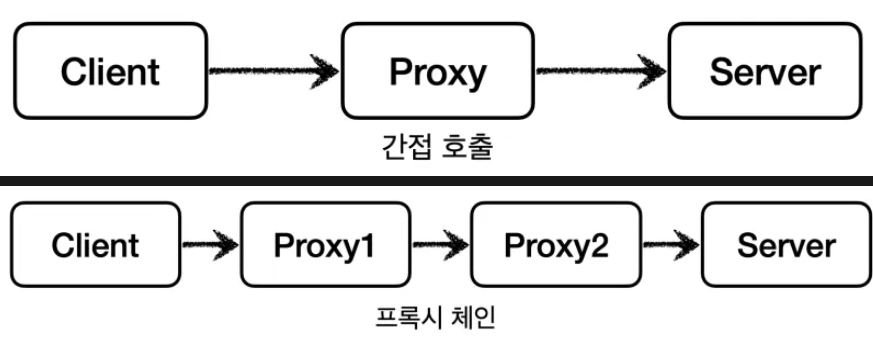
- 서버와 프록시가 같은 인터페이스를 사용한다.
- 클라이언트는 서버에게 요청한 것인지, 프록시에게 요청한 것인지 조차 몰라야 한다.
![]()
- 프록시 주요 기능
- 접근 제어:
프록시 패턴- 권한에 따른 접근 차단
- 캐싱
- 지연 로딩
- 부가 기능 추가:
데코레이터 패턴- 예) 요청 값이나, 응답 값을 중간에 변형
- 예) 실행 시간을 측정해서 추가 로그를 남긴다.
- 접근 제어:

프록시 패턴(접근 제어)
1
2
3
4
5
6
7
8
9
10
11
12
13
14
15
16
17
18
19
20
21
22
23
24
25
26
27
28
29
30
31
32
33
34
35
36
37
38
39
40
41
42
43
44
45
46
47
48
49
50
51
52
53
54
55
56
57
58
59
60
61
62
63
64
65
66
67
68
69
70
71
72
73
74
75
76
77
78
79
80
81
82
83
84
85
86
87
public interface Subject {
    String operation();
}

@Slf4j
public class RealSubject implements Subject {

    @Override
    public String operation() {
        log.info("실제 객체 호출");
        sleep(1000);
        return "data";
    }

    private void sleep(int millis) {
        try {
            Thread.sleep(millis);
        } catch (InterruptedException e) {
            e.printStackTrace();
        }
    }

}

public class ProxyPatternClient {

    private Subject subject;
    public ProxyPatternClient(Subject subject) {
        this.subject = subject;
    }
    public void execute() {
        subject.operation();
    }
}

@Slf4j
public class CacheProxy implements Subject {

    private Subject target;
    private String cacheValue;
    public CacheProxy(Subject target) {
        this.target = target;
    }

    @Override
    public String operation() {
        log.info("프록시 호출");
        if (cacheValue == null) {
            cacheValue = target.operation();
        }
        return cacheValue;
    }
}

public class ProxyPatternTest {

    @Test
    void noProxyTest() {
        Subject realSubject = new RealSubject();
        ProxyPatternClient client = new ProxyPatternClient(realSubject);
        client.execute();
        client.execute();
        client.execute();
        /*
            실제 객체 호출 (1초)
            실제 객체 호출 (1초)
            실제 객체 호출 (1초)
         */
    }

    @Test
    void cacheProxyTest() {
        Subject realSubject = new RealSubject();
        Subject cacheProxy = new CacheProxy(realSubject);
        ProxyPatternClient client = new ProxyPatternClient(cacheProxy);
        client.execute();
        client.execute();
        client.execute();
        /*
            프록시 호출
            실제 객체 호출    (1초)
            프록시 호출      (즉시 호출)
            프록시 호출      (즉시 호출)
         */
    }

}
데코레이터 패턴(부가 기능 추가)
1
2
3
4
5
6
7
8
9
10
11
12
13
14
15
16
17
18
19
20
21
22
23
24
25
26
27
28
29
30
31
32
33
34
35
36
37
38
39
40
41
42
43
44
45
46
47
48
49
50
51
52
53
54
55
56
57
58
59
60
61
62
63
64
65
66
67
68
69
70
71
72
73
74
75
76
77
78
79
80
81
82
83
84
85
86
87
88
89
90
91
92
93
94
95
96
public interface Component {
    String operation();
}

@Slf4j
public class RealComponent implements Component{
    @Override
    public String operation() {
        log.info("RealComponent 실행");
        return "data";
    }
}

@Slf4j
public class MessageDecorator implements Component {

    private Component component;
    public MessageDecorator(Component component) {
        this.component = component;
    }

    @Override
    public String operation() {
        log.info("MessageDecorator 실행");
        String result = component.operation();
        String decoResult = "***" + result + "***";
        log.info("MessageDecorator 꾸미기 적용 전={}, 적용 후={}", result, decoResult);
        return decoResult;
    }
}

@Slf4j
public class TimeDecorator implements Component {
    private Component component;

    public TimeDecorator(Component component) {
        this.component = component;
    }

    @Override
    public String operation() {
        log.info("TimeDecorator 실행");
        long startTime = System.currentTimeMillis();
        String result = component.operation();
        long endTime = System.currentTimeMillis();
        long resultTime = endTime - startTime;
        log.info("TimeDecorator 종료 resultTime={}ms", resultTime);
        return result;
    }

}

@Slf4j
public class DecoratorPatternClient {

    private Component component;

    public DecoratorPatternClient(Component component) {
        this.component = component;
    }

    public void execute() {
        String result = component.operation();
        log.info("result={}", result);
    }

}

@Slf4j
public class DecoratorPatternTest {

    @Test
     void noDecorator() {
        Component realComponent = new RealComponent();
        DecoratorPatternClient client = new DecoratorPatternClient(realComponent);
        client.execute();
    }

    @Test
    void decorator1() {
        Component realComponent = new RealComponent();
        Component messageDecorator = new MessageDecorator(realComponent);
        DecoratorPatternClient client = new DecoratorPatternClient(messageDecorator);
        client.execute();
    }

    @Test
    void decorator2() {
        Component realComponent = new RealComponent();
        Component messageDecorator = new MessageDecorator(realComponent);
        Component timeDecorator = new TimeDecorator(messageDecorator);
        DecoratorPatternClient client = new DecoratorPatternClient(timeDecorator);
        client.execute();
    }

}
⭐ 정리
프록시를 사용하고 해당 프록시가 접근 제어가 목적이라면 프록시 패턴이고, 새로운 기능을 추가하는 것이 목적이라면 데코레이터 패턴이 된다.
인터페이스 기반 프록시 - 적용
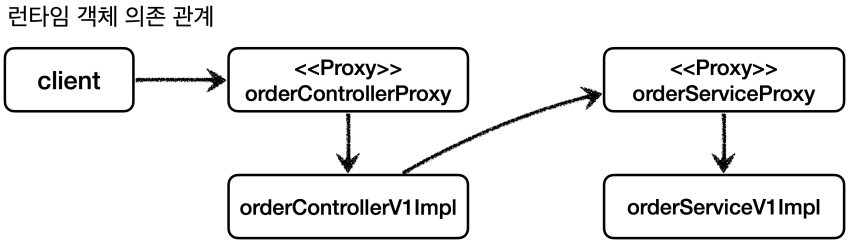

인터페이스가 있는 구현 클래스에 적용
1
2
3
4
5
6
7
8
9
10
11
12
13
14
15
16
17
18
19
20
21
22
23
24
25
26
27
28
29
30
31
32
33
34
35
36
37
38
39
40
41
42
43
44
45
46
47
48
49
50
51
52
53
54
55
56
57
58
59
60
61
62
63
64
65
66
67
68
69
70
71
72
73
/**
 * 이전 OrderRepositoryImpl 에 추가해야했었던 로직을 프록시를 사용하여 분리한다.
 */
@RequiredArgsConstructor
public class OrderRepositoryInterfaceProxy implements OrderRepositoryV1 {

    private final OrderRepositoryV1 target;
    private final LogTrace logTrace;

    @Override
    public void save(String itemId) {
        TraceStatus status = null;
        try {
            status = logTrace.begin("OrderRepository.save()");
            //target 호출
            target.save(itemId);
            logTrace.end(status);
        } catch (Exception e) {
            logTrace.exception(status, e);
            throw e;
        }
    }
}

@RequiredArgsConstructor
public class OrderServiceInterfaceProxy implements OrderServiceV1 {

    private final OrderServiceV1 target;
    private final LogTrace logTrace;

    @Override
    public void orderItem(String itemId) {
        TraceStatus status = null;
        try {
            status = logTrace.begin("OrderService.orderItem()");
            //target 호출
            target.orderItem(itemId);
            logTrace.end(status);
        } catch (Exception e) {
            logTrace.exception(status, e);
            throw e;
        }
    }

}

@RequiredArgsConstructor
public class OrderControllerInterfaceProxy implements OrderControllerV1 {

    private final OrderControllerV1 target;
    private final LogTrace logTrace;

    @Override
    public String request(String itemId) {
        TraceStatus status = null;
        try {
            status = logTrace.begin("OrderController.request()");
            //target 호출
            String result = target.request(itemId);
            logTrace.end(status);
            return result;
        } catch (Exception e) {
            logTrace.exception(status, e);
            throw e;
        }
    }

    @Override
    public String noLog() {
        return target.noLog();
    }

}
1
2
3
4
5
6
7
8
9
10
11
12
13
14
15
16
17
18
19
20
21
22
23
24
25
26
27
28
29
30
31
32
33
34
35
36
37
@Configuration
public class InterfaceProxyConfig {

    @Bean
    public OrderControllerV1 orderController(LogTrace logTrace) {
        OrderControllerV1Impl controllerImpl = new
                OrderControllerV1Impl(orderService(logTrace));
        return new OrderControllerInterfaceProxy(controllerImpl, logTrace);
    }
    @Bean
    public OrderServiceV1 orderService(LogTrace logTrace) {
        OrderServiceV1Impl serviceImpl = new
                OrderServiceV1Impl(orderRepository(logTrace));
        return new OrderServiceInterfaceProxy(serviceImpl, logTrace);
    }
    @Bean
    public OrderRepositoryV1 orderRepository(LogTrace logTrace) {
        OrderRepositoryV1Impl repositoryImpl = new OrderRepositoryV1Impl();
        return new OrderRepositoryInterfaceProxy(repositoryImpl, logTrace);
    }

}

@Import(InterfaceProxyConfig.class)
@SpringBootApplication(scanBasePackages = "hello.proxy.app") // 주의
public class ProxyApplication {

	public static void main(String[] args) {
		SpringApplication.run(ProxyApplication.class, args);
	}

	@Bean
	public LogTrace logTrace() {
		return new ThreadLocalLogTrace();
	}

}
구체 클래스 기반 프록시
- 인터페이스가 없는 구체 클래스에 프록시 적용(클래스를 상속받아 프록시 클래스 사용)
구체 클래스 기반 프록시 - 예제
1
2
3
4
5
6
7
8
9
10
11
12
13
14
15
16
17
18
19
20
21
22
23
24
25
26
27
28
29
30
31
32
33
34
35
36
37
38
39
40
41
42
43
44
45
46
47
48
49
50
51
52
53
54
55
56
57
58
59
60
61
@Slf4j
public class ConcreteLogic {

    public String operation() {
        log.info("ConcreteLogic 실행");
        return "data";
    }

}

@Slf4j
public class TimeProxy extends ConcreteLogic {

    private ConcreteLogic realLogic;

    public TimeProxy(ConcreteLogic realLogic) {
        this.realLogic = realLogic;
    }

    @Override
    public String operation() {
        log.info("TimeDecorator 실행");
        long startTime = System.currentTimeMillis();
        String result = realLogic.operation();
        long endTime = System.currentTimeMillis();
        long resultTime = endTime - startTime;
        log.info("TimeDecorator 종료 resultTime={}", resultTime);
        return result;
    }
}

public class ConcreteClient {

    private ConcreteLogic concreteLogic;
    public ConcreteClient(ConcreteLogic concreteLogic) {
        this.concreteLogic = concreteLogic;
    }
    public void execute() {
        concreteLogic.operation();
    }

}

public class ConcreteProxyTest {

    @Test
    void noProxy() {
        ConcreteLogic concreteLogic = new ConcreteLogic();
        ConcreteClient client = new ConcreteClient(concreteLogic);
        client.execute();
    }

    @Test
    void addProxy() {
        ConcreteLogic concreteLogic = new ConcreteLogic();
        TimeProxy timeProxy = new TimeProxy(concreteLogic);
        ConcreteClient client = new ConcreteClient(timeProxy);
        client.execute();
    }

}
구채 클래스 기반 프록시 - 적용
1
2
3
4
5
6
7
8
9
10
11
12
13
14
15
16
17
18
19
20
21
22
23
24
25
26
27
28
29
30
31
32
33
34
35
36
37
38
39
40
41
42
43
44
45
46
47
/*
  서비스 프록시만 예시로 보여줌
*/
@RequiredArgsConstructor
public class OrderServiceInterfaceProxy implements OrderServiceV1 {

    private final OrderServiceV1 target;
    private final LogTrace logTrace;

    @Override
    public void orderItem(String itemId) {
        TraceStatus status = null;
        try {
            status = logTrace.begin("OrderService.orderItem()");
            //target 호출
            target.orderItem(itemId);
            logTrace.end(status);
        } catch (Exception e) {
            logTrace.exception(status, e);
            throw e;
        }
    }

}

@Configuration
public class ConcreteProxyConfig {

    @Bean
    public OrderControllerV2 orderControllerV2(LogTrace logTrace) {
        OrderControllerV2 controllerImpl = new
                OrderControllerV2(orderServiceV2(logTrace));
        return new OrderControllerConcreteProxy(controllerImpl, logTrace);
    }
    @Bean
    public OrderServiceV2 orderServiceV2(LogTrace logTrace) {
        OrderServiceV2 serviceImpl = new
                OrderServiceV2(orderRepositoryV2(logTrace));
        return new OrderServiceConcreteProxy(serviceImpl, logTrace);
    }
    @Bean
    public OrderRepositoryV2 orderRepositoryV2(LogTrace logTrace) {
        OrderRepositoryV2 repositoryImpl = new OrderRepositoryV2();
        return new OrderRepositoryConcreteProxy(repositoryImpl, logTrace);
    }

}